① Intro
Welcome to K Trip Easy, where Korean drama comes with subtitles for the culture, too. Today we’re heading to Unrimsanbang, a historic garden and painting studio in Jindo, a county on Korea’s far southwest coast.
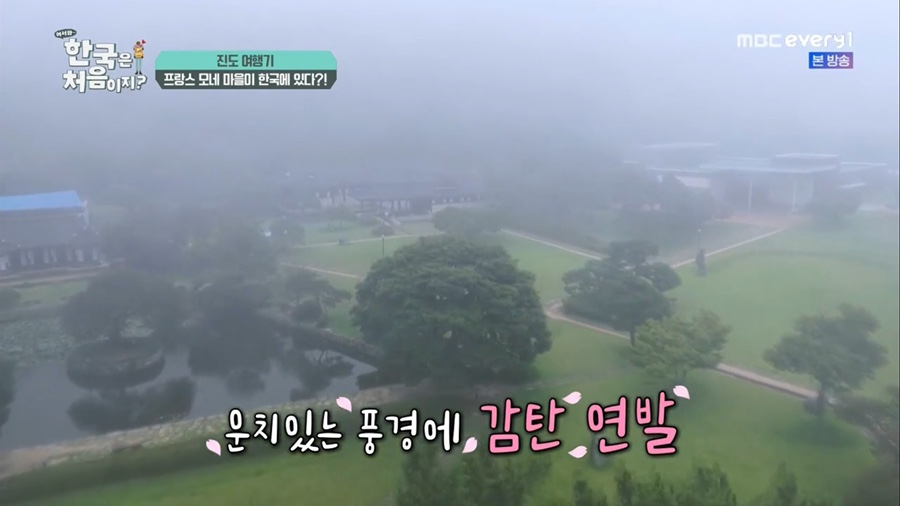
Unrimsanbang was featured on the popular Korean variety show Welcome, First Time in Korea? (어서와 한국은 처음이지?). The show follows a foreigner living in Korea who invites friends or family from back home and travels the country with them through first-time eyes. On the air since 2017, it’s loved for revealing Korea’s destinations, food, and culture from an outsider’s fresh perspective. In Episode 445, three long-time Korea residents — Fabien from France, Alberto from Italy, and Julien Kang from Canada — toured Jindo together. All three speak fluent Korean and have lived in Korea for a combined 60 years, prompting a running studio joke that they were “just three Korean guys.” Even so, the mist-covered scenery of Unrimsanbang still stopped them in their tracks.
Where to watch: The show airs on MBC every1 in Korea and streams on Wavve and Watcha; Netflix carries it in some regions. Note that the newest season (the current reboot) can be slow to appear on streaming, so the latest episodes may not be up yet. Netflix availability also varies by country.
② What Is Unrimsanbang?
Unrimsanbang is a painting studio built in 1857 by Heo Ryeon (pen name Sochi), a painter of the late Joseon Dynasty, after he returned to his hometown of Jindo. The name Unrim (雲林) means “cloud forest,” taken from the way morning and evening mist drapes over the surrounding hills like clouds. So visiting on a gray, foggy day actually shows the place at its truest.
Heo Ryeon was a master of namjonghwa, Korea’s literati painting tradition — a style that values the painter’s spirit, learning, and restrained brushwork over realistic depiction. He studied painting and calligraphy under Kim Jeong-hui (pen name Chusa), one of Joseon’s greatest scholars and calligraphers, and went on to build the foundations of the literati art scene in Korea’s southern Honam region. In simple terms, much as European art has lineages of masters and their schools, Heo Ryeon opened one of the defining lineages of Korean literati painting.
③ What You’ll See
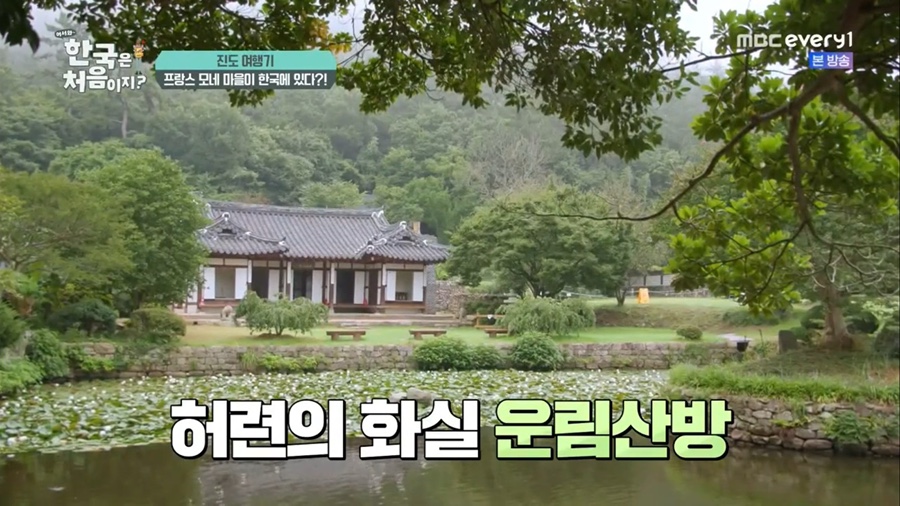
The greatest appeal of Unrimsanbang is that the buildings, pond, and garden aren’t separate attractions — they’re composed as a single landscape. The painting spaces and the natural scenery were designed as one, so it feels different from simply touring an old house.
- Unrimgak: Heo Ryeon’s painting studio and reception hall.
- Main house and thatched cottage: Showing the simple, tidy mood of traditional Korean hanok architecture.
- The pond and crape myrtle: The pond is about 35 meters across on one side, with a round island of natural stone at its center. On that island grows a crape myrtle said to have been planted by Heo Ryeon himself — the water-and-tree view that has become the site’s signature scene. In summer, the tree’s red blossoms are especially beautiful.
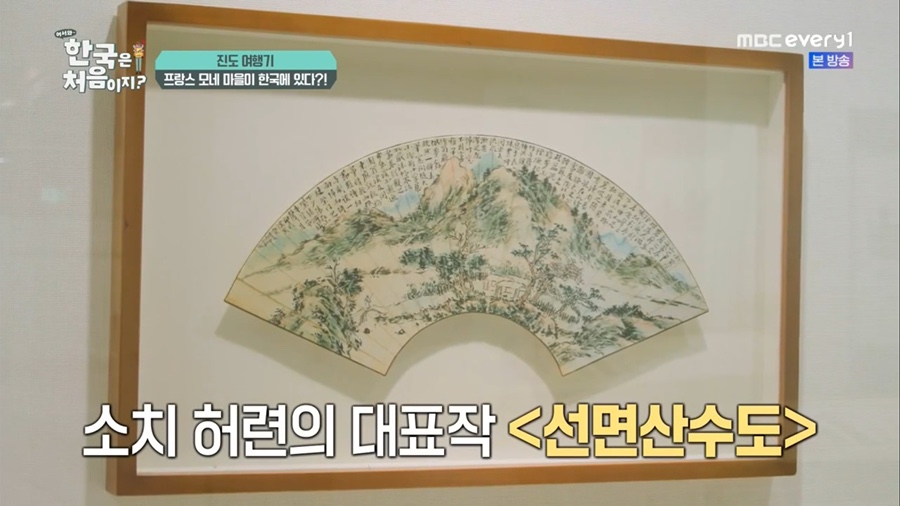
- Sochi Memorial Hall: Here you can see, in one place, five generations of the Heo family’s literati-painting lineage. Works by his son Heo Hyeong, grandson Heo Geon, and other direct descendants are displayed — a rare case of one family carrying a painting style across generations. Heo Ryeon’s famous folding-fan landscape painting is also on view here.
Unrimsanbang was designated a National Scenic Site in 2011. The designation covers not just the studio but the whole historic-and-natural landscape, including Cheomchalsan Mountain behind it and the evergreen forest of nearby Ssanggyesa Temple. So rather than stepping out after only the indoor exhibits, take your time walking the pond, the garden, and the surrounding hills.
④ A Studio Like Korea’s Giverny
On the show, Fabien and Alberto immediately thought of Giverny in France the moment they saw Unrimsanbang. Giverny is the garden where the Impressionist master Claude Monet lived for 43 years and painted his water lilies. The two places rhyme in one clear way: each is a space where a single painter built his own world within nature and made his art there.
But the mood is worlds apart. Where Giverny is a garden of vivid, cheerful color — tulips, roses, a green arched bridge — Unrimsanbang is a quiet space of mist, ink tones, and stillness. Instead of overwhelming you with abundance, it settles your mind through emptiness and restraint. In a sense, the two gardens embody the difference between Western Impressionism and East Asian literati aesthetics. If Giverny left an impression on you in Europe, experiencing Unrimsanbang — its counterpart in the East — will feel special.
⑤ Try It Yourself: Ink-Brush Painting
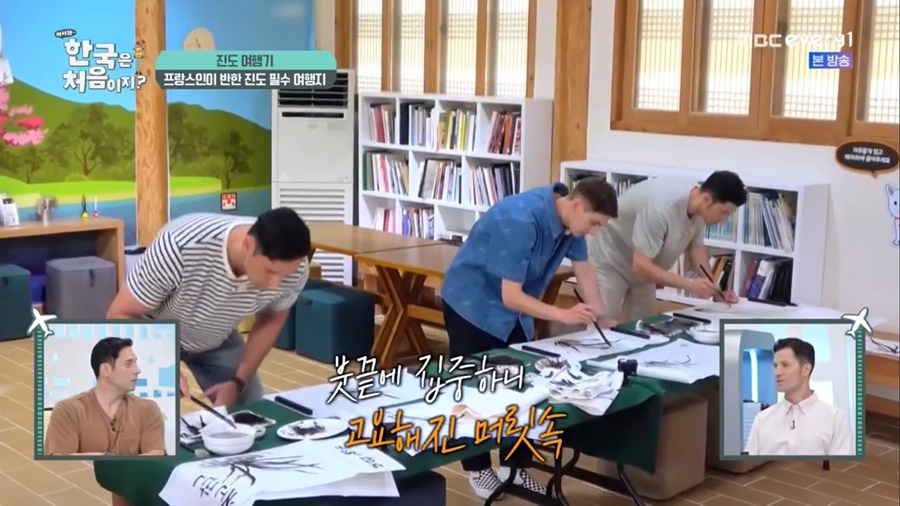
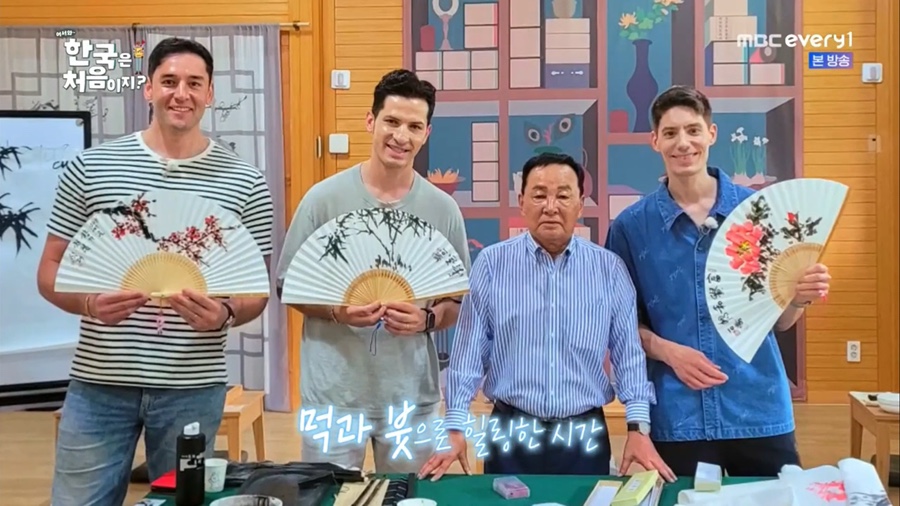
At Unrimsanbang you don’t just look — you can pick up a brush yourself. On the show, after touring the memorial hall, the three visitors said “let’s try it too” and joined the ink-brush painting experience. Their teacher that day was the painter Kim Yong-seon (pen name Seokjae), and they tried painting an orchid, one of the “Four Gentlemen.”
The Four Gentlemen (sagunja) are four plants — plum blossom, orchid, chrysanthemum, and bamboo. Each symbolizes a scholarly virtue such as integrity or nobility, and Joseon-era scholars painted them as a form of self-cultivation. So painting the Four Gentlemen isn’t just drawing practice; it’s closer to composing one’s mind.
The session works by watching the teacher demonstrate and then copying. Watching an orchid bloom in an instant under a brush gliding confidently across the paper draws real admiration. Copying it, of course, is another matter. On the show, the tall Julien Kang struggled just with the height of the low floor-level desk, and his uncooperative brushwork got him “confiscated” by the teacher more than once — a genuinely funny moment. Still, focusing on the tip of the brush turns into a meditative, quieting kind of time. Afterward, each visitor received a fan hand-painted by the teacher as a gift, and fanning themselves with it on the way out made for a charming finish.
⑥ Plan Your Visit
Unrimsanbang pairs well with Jindo’s other sights as a half-day outing. Here’s practical information worth knowing before you go.
- Address: 315 Unrimsanbang-ro, Uisin-myeon, Jindo-gun, Jeollanam-do
- Admission: Adults ₩2,000 / Teens & military ₩1,000 / Children ₩800 (very cheap — under about US$1.50)
- Free entry: Ages 65+, preschool children, and Jindo residents (ID required)
- Hours: Mar–Oct 09:00–18:00 / Nov–Feb 09:00–17:00 (last entry 30 minutes before closing)
- Closed: Mondays, and the days of Seollal (Lunar New Year) and Chuseok
- Painting experience: The hands-on session seen on the show may not run at all times. If you’d like to join, ask Jindo County tourism or Unrimsanbang directly before your visit.
Getting there:
- Public transport: Jindo has no train station of its own. From Seoul and elsewhere, the usual route is KTX or SRT to Mokpo Station, then an intercity bus from Mokpo to Jindo. From Jindo’s central bus terminal, transfer to a local bus heading toward Unrimsanbang.
- Car or rental recommended: Local buses within Jindo run infrequently, so a rental car is by far the easiest way to combine Unrimsanbang with nearby restaurants and the coast. Many visitors rent a car in Mokpo or Gwangju and cross the Jindo Bridge.
- Parking: Parking is available at Unrimsanbang.
Nearby, worth combining:
- Ssanggyesa evergreen forest: Part of the same designated scenic landscape as Unrimsanbang, and right next door — easy to see together.
- Jindo Arirang Monument: About 150 meters away, within walking distance.
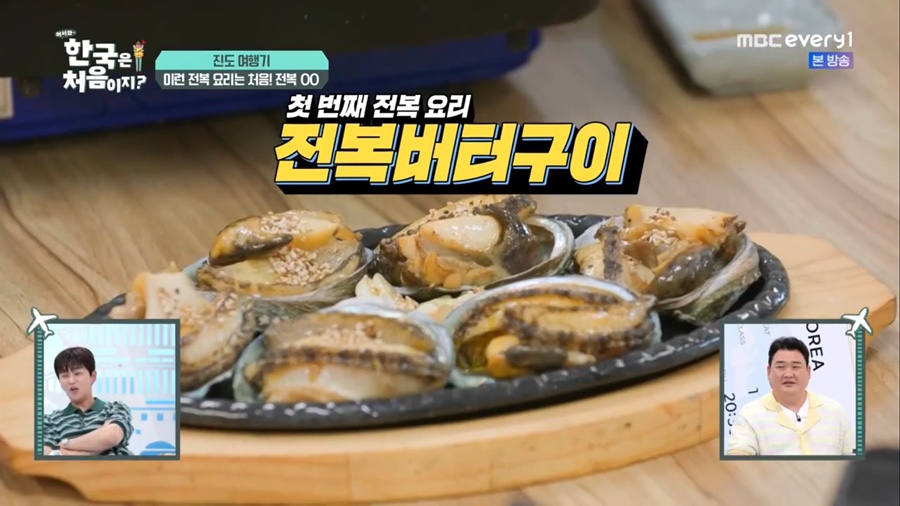
- Where to eat: After Unrimsanbang, it’s a great time to try Jindo’s signature delicacy — abalone. The story of a seaside abalone restaurant continues in the next post. → (link to Gaon Jeonbok post)
⑦ The Takeaway
Unrimsanbang isn’t a place that overwhelms visitors with spectacle. It’s a place that settles the mind — through mist and a still pond, through ink-toned paintings, through the quiet at the tip of a brush. This calm garden stopped even three well-traveled foreigners in their tracks, and it reveals another face of Korean beauty. If you’re heading to Jindo, make room for this experience of walking straight into a literati painting.
Korean drama, made easy — one episode at a time. This has been K Trip Easy. ✈️
👀 You Might Also Like