
① Intro
Welcome to K Trip Easy, where Korean drama comes with subtitles for the culture, too. Today we’re heading to Gaon Jeonbok, a seaside abalone restaurant in Jindo, a county on Korea’s far southwest coast.
The restaurant appeared on the Korean variety show Welcome, First Time in Korea? (어서와 한국은 처음이지?), a reality show that follows foreigners living in Korea as they invite friends or family from home and travel the country together. In Episode 445, three long-time Korea residents — Fabien from France, Alberto from Italy, and Julien Kang from Canada — toured Jindo. In all three of their home countries, abalone is a rare and expensive delicacy, so the three were thoroughly excited at the thought of tasting Jindo’s.
Where to watch: The show airs on MBC every1 in Korea and streams on Wavve and Watcha; Netflix carries it in some regions. Note that the newest season (the current reboot) can be slow to appear on streaming, so the latest episodes may not be up yet. Netflix availability also varies by country.
② Why Jindo Abalone Is Special
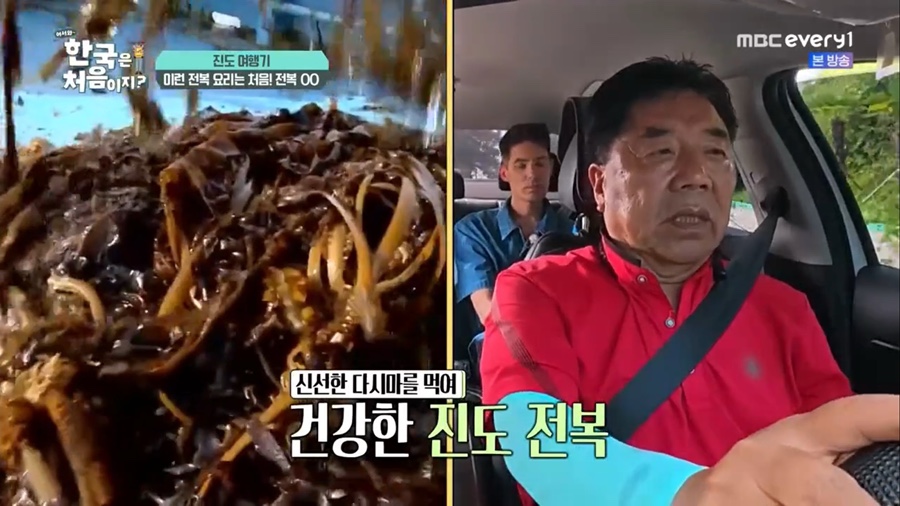
On the way to Gaon Jeonbok, the three noticed a farm floating on the sea and asked the driver what was being raised there. The answer was kelp — but with a twist. This kelp isn’t grown for people to eat; it’s grown as feed for abalone.
That’s the first reason Jindo abalone is special. An abalone’s flavor and condition depend on the seaweed it eats, and in Jindo they raise fresh kelp specifically to feed them. A well-fed abalone naturally grows healthier and plumper.
The second reason is the sea itself. The waters off Jindo have strong currents and a water temperature unlike other regions, so the abalone here grow firmer in the flesh. That gives them a much chewier, denser texture. On the show, the driver and all three guests kept repeating the same word — “firm.”
③ Gaon Jeonbok, Facing the Sea
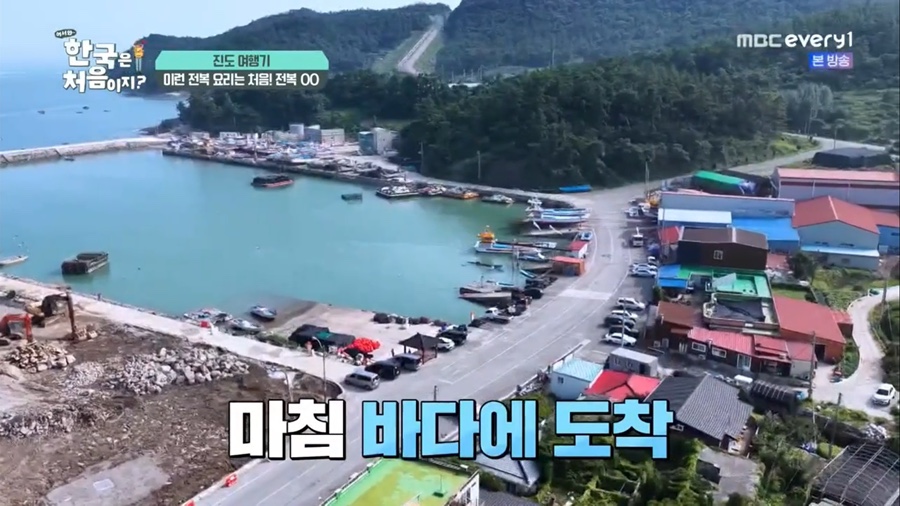
Gaon Jeonbok is an abalone specialty restaurant near Jindo’s Chopyeong Port, sitting right in front of the sea. You can dine while watching the ocean through the window, so it’s not just the food that feels like Jindo — the setting does too. Abalone is the focus, but the menu also includes octopus dishes like nakji-tangtangi (chopped raw octopus) and yeonpo-tang (octopus soup). The interior is spacious and clean, with high chairs and facilities for groups, so it works for family meals and gatherings.
- Address: 70-1 Chopyeong-gil, Uisin-myeon, Jindo-gun, Jeollanam-do (1st floor)
- Signature menu & price: Abalone haesin-tang (health stew) ₩100,000 (reservation required); Abalone set (large) ₩120,000; Abalone with grilled pork belly ₩80,000
- Menu & price: Abalone sashimi (large) ₩60,000; Steamed abalone (large) ₩50,000; Butter-grilled abalone (large) ₩50,000; Abalone bulgogi seafood soup (large) ₩70,000
- Meals & price: Abalone-seaweed bibimbap ₩13,000; Abalone galbi-tang / cold abalone soup / abalone porridge ₩15,000 each; Abalone doenjang stew ₩10,000
- Hours: 09:00–21:00 (break time 15:00–17:00)
- Note on break time: Closed 3–5 p.m., so avoid a late lunch
- Parking: Available in front of the restaurant
- Reservation: Accepted; required for the abalone haesin-tang
- Conveniences: Spacious, clean interior; high chairs; group seating; takeout and delivery available
Tip: With several people, order a mix of preparations — sashimi, steamed, and butter-grilled — to enjoy the different textures.
④ The Dishes: Butter-Grilled Abalone & Samhap
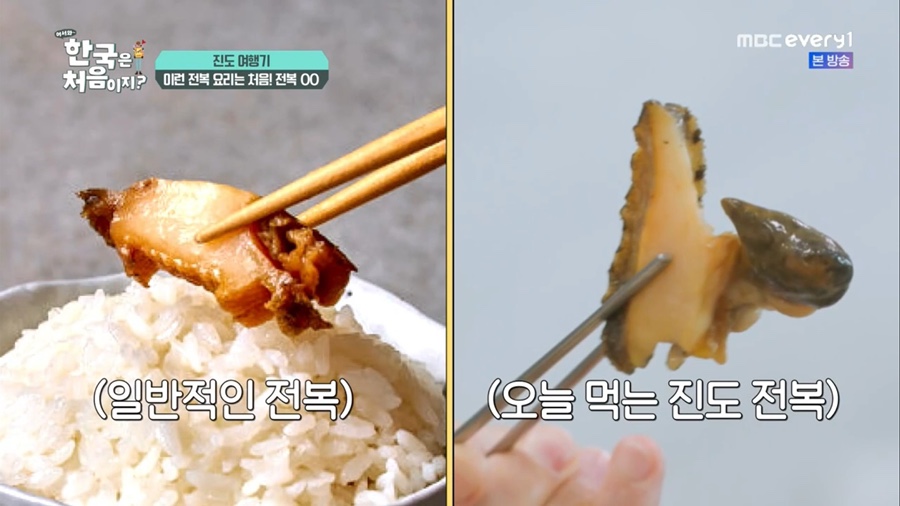
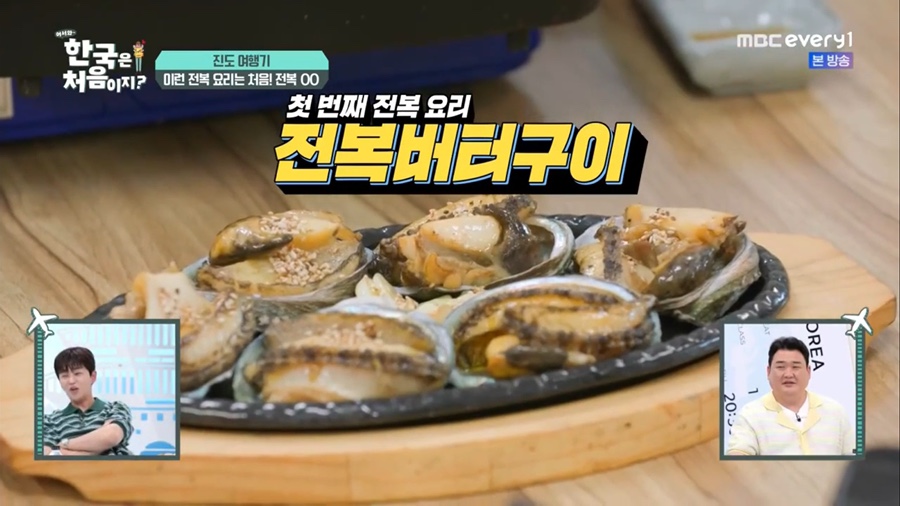
The first dish out was butter-grilled abalone. It was so large that Alberto, playing on his big-framed friend, gave it the affectionate nickname “the Julien of abalone.” Set beside an ordinary abalone, the difference was obvious. All three raved that it was delicious, with a texture as pronounced as its size — chewy and firm.
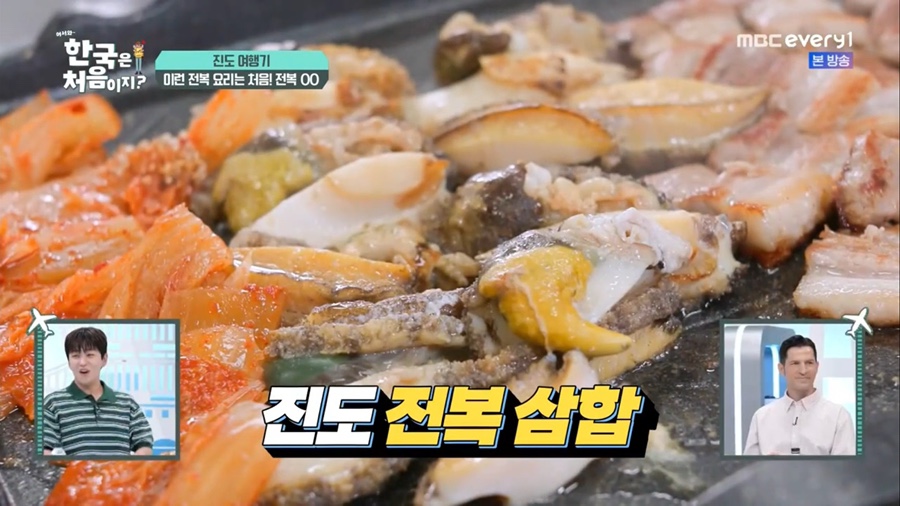
Next came the restaurant’s specialty: abalone grilled with pork belly. The idea of cooking abalone in pork-belly fat surprised all three, but it brings out a savory flavor different from the buttered version. Add Jeolla-style mugeun-ji (long-aged kimchi), and you have “Jindo abalone samhap.”
Samhap is a distinctly Korean way of eating three ingredients together in one bite. The point is that different flavors and textures blend in the mouth to create a single new taste. Alberto layered pork belly, abalone, and aged kimchi onto a spoon in order, ate it in one bite, and declared it “so good it makes no sense.” He’d never known aged kimchi and abalone could pair so well, and kept making the emphatic hand gestures Italians reserve for truly great food.
⑤ Other Abalone Dishes Worth Trying
The show featured the butter-grilled and pork-belly versions, but Gaon Jeonbok’s real strength is the range of ways you can enjoy abalone. On a first visit, mixing preparations is the way to go.
- Abalone sashimi: For the freshest experience and the firm texture Jindo abalone is known for.
- Abalone porridge: Mild and soft — a good choice with children or older family, and a nice way to finish a meal.
- Abalone haesin-tang (health stew): The house’s signature restorative dish. Great if you want a rich, hot broth, but reservation is required, so call ahead.
- Abalone-seaweed bibimbap: A good single bowl when you want to taste abalone without spending much.
As all three guests agreed, abalone is a prized ingredient in the West. Being able to eat abalone this large, this affordably, and in this many styles — in Korea, and specifically in Jindo — is a clear draw for travelers.
⑥ Plan Your Visit
Gaon Jeonbok is a great place to make one meal count on a Jindo trip. Here’s what to know.
- Address: 70-1 Chopyeong-gil, Uisin-myeon, Jindo-gun, Jeollanam-do (1st floor)
- Reservation: Recommended for popular dishes, and required for the abalone haesin-tang. Calling ahead is safest on weekends and in peak season.
- Break time: Closed 3–5 p.m., so plan lunch on the early side and dinner after 5.
- Budget: Grilled, sashimi, and set dishes generally run ₩50,000–120,000 (meant to share among 2–3); single-serving meals are ₩10,000–15,000.
Getting there:
- Jindo has no train station. The usual routes are KTX/SRT to Mokpo Station and then an intercity bus to Jindo, or driving a rental car across the Jindo Bridge.
- Buses around Chopyeong Port are infrequent, so a rental car or taxi is easiest.
- Parking is available in front of the restaurant.
Combine it with:
- Unrimsanbang: The home of late-Joseon literati painting, a scenic site with a beautiful misty garden and pond — an easy stop before or after your meal. → (link to Unrimsanbang post)
- Chopyeong Port waterfront: A relaxed stroll along the sea right out front after your meal.
Other abalone spots in Jindo:
- Beyond Gaon Jeonbok, several restaurants in Jindo serve abalone. In case the restaurant is closed or full on your day, it’s reassuring to look up a few other abalone and seafood places around Chopyeong Port and Uisin-myeon in advance.
⑦ The Takeaway
Watching kelp-fed Jindo abalone meet pork-belly fat and aged kimchi to become samhap shows how a single ingredient can carry a region’s sea and its methods within it. The flavor that kept three Western guests exclaiming is worth confirming for yourself, in a seat facing the sea, if you travel to Jindo. One plump piece of abalone might just become the sharpest memory of your trip.
Korean drama, made easy — one episode at a time. This has been K Trip Easy. ✈️